Dear Coreform Support Team & Community,
I am working on a computational geophysics project modeling surface deformation induced by a deep ellipsoidal magma chamber. The workflow involves generating a high-quality background mesh in Cubit, importing it into deal.II for adaptive FEM forward modeling, and subsequently using the results for parameter inversion.
Objective:
- Domain:
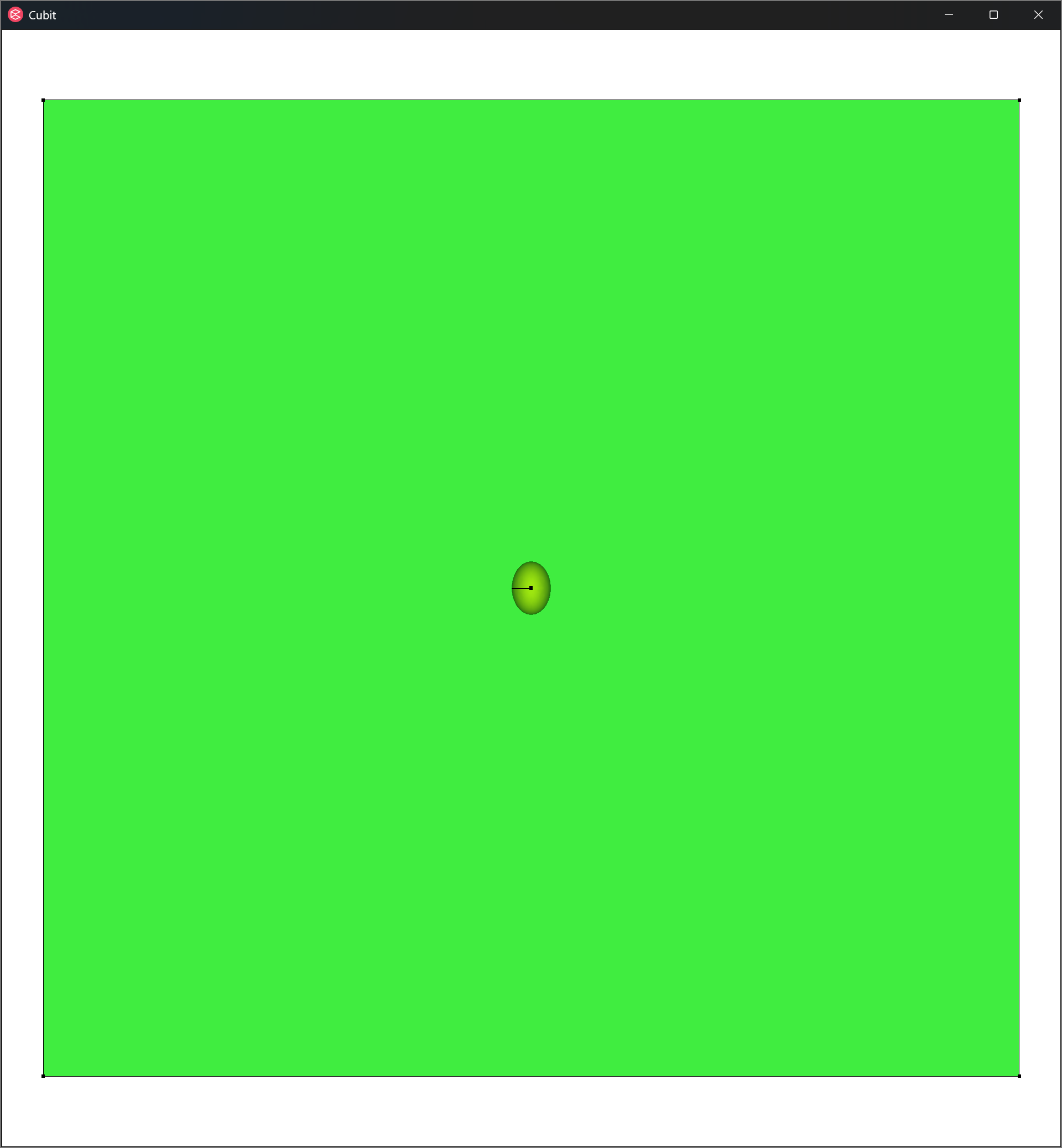
100×100×100 kmcuboid, centered at(0,0,-50km). - Cavity: Ellipsoid (
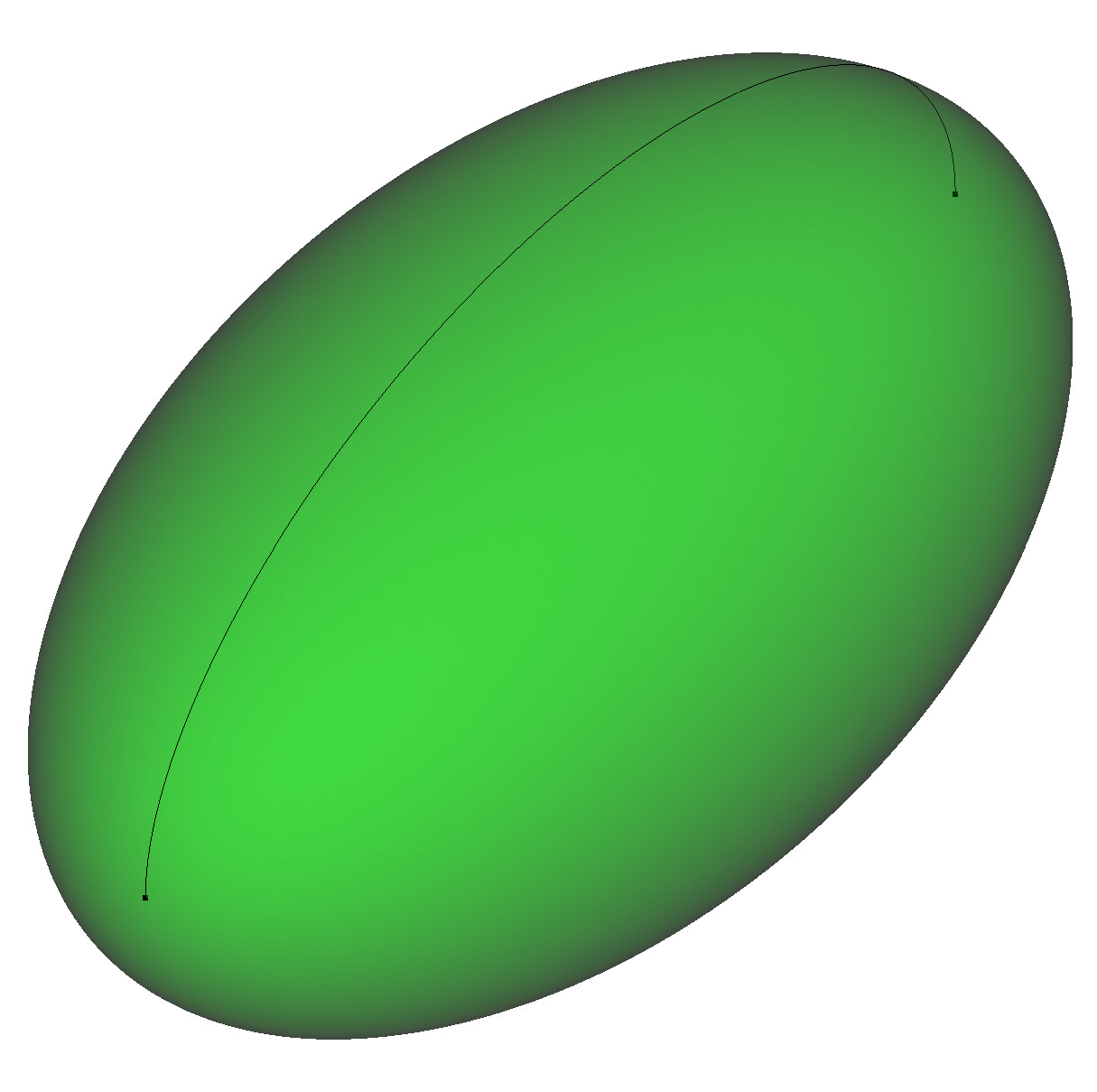
a=2km, b=2.71km, c=3.032km) centered atz=-6.86km. - Mesh Requirements:
- Pure hexahedral elements (deal.II compatibility).
Scaled Jacobian ≥ 0.7globally.- Smooth size grading:
~100-200mat cavity surface →~4000mat far-field boundaries. - Fast generation speed (will be rerun multiple times for inversion loops).
 Current Issue: My current journal uses
 scheme polyhedron combined with sizing function skeleton . While it generates a mesh, the quality is unacceptable:
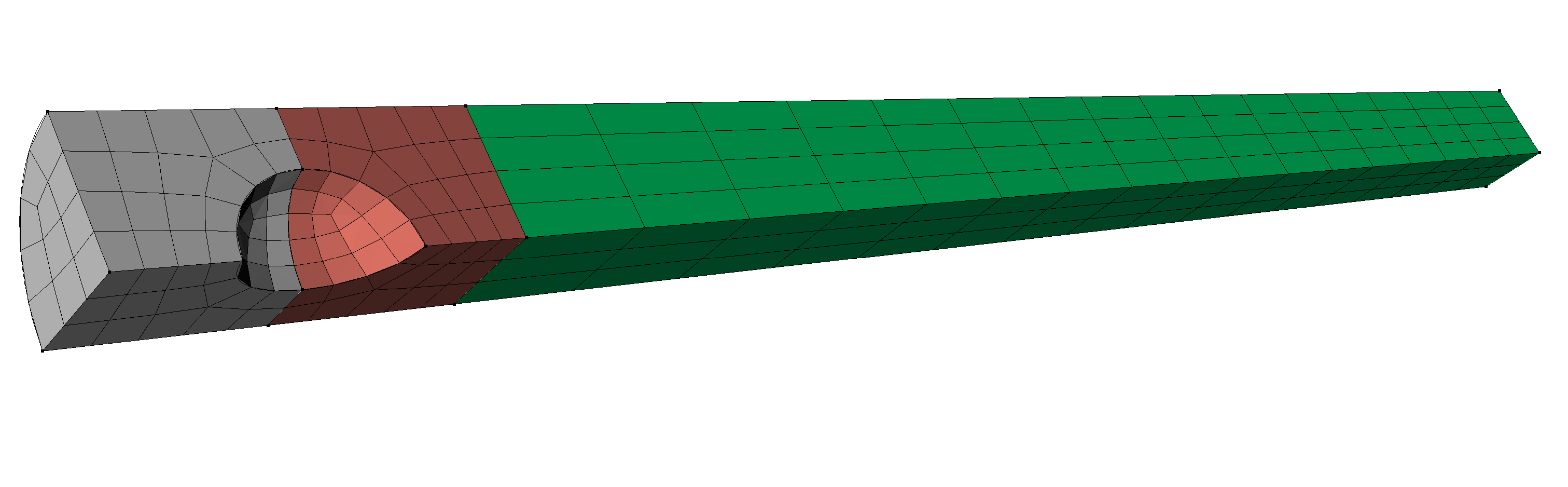
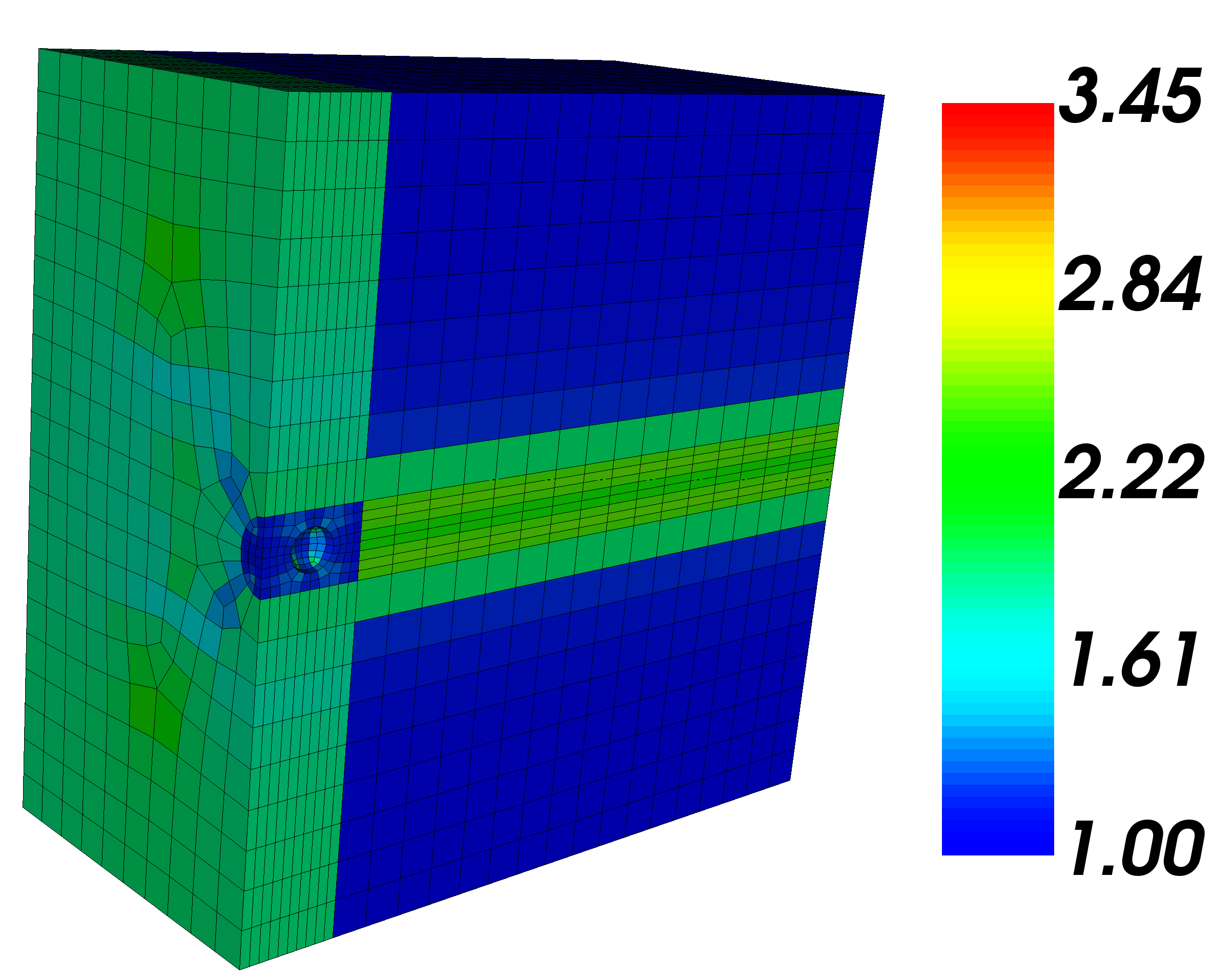
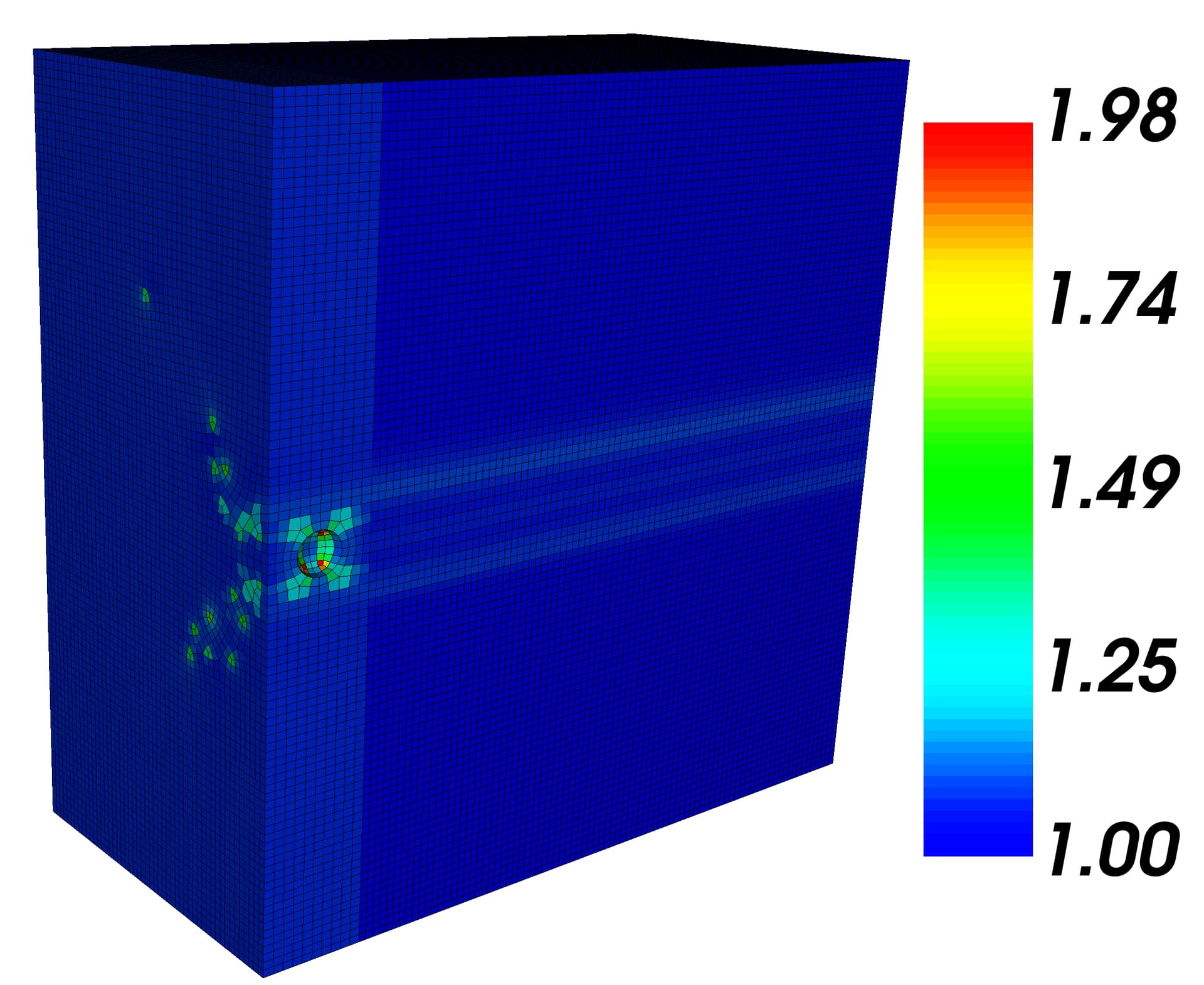
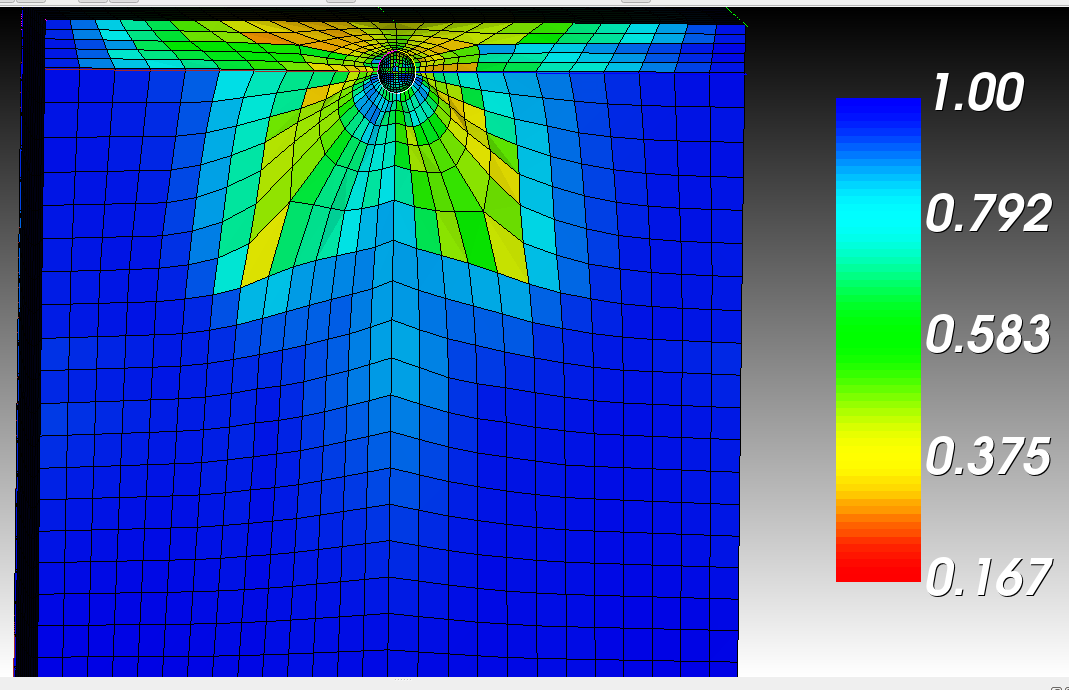
- Severe distortion radiates from the cavity toward the top boundary.
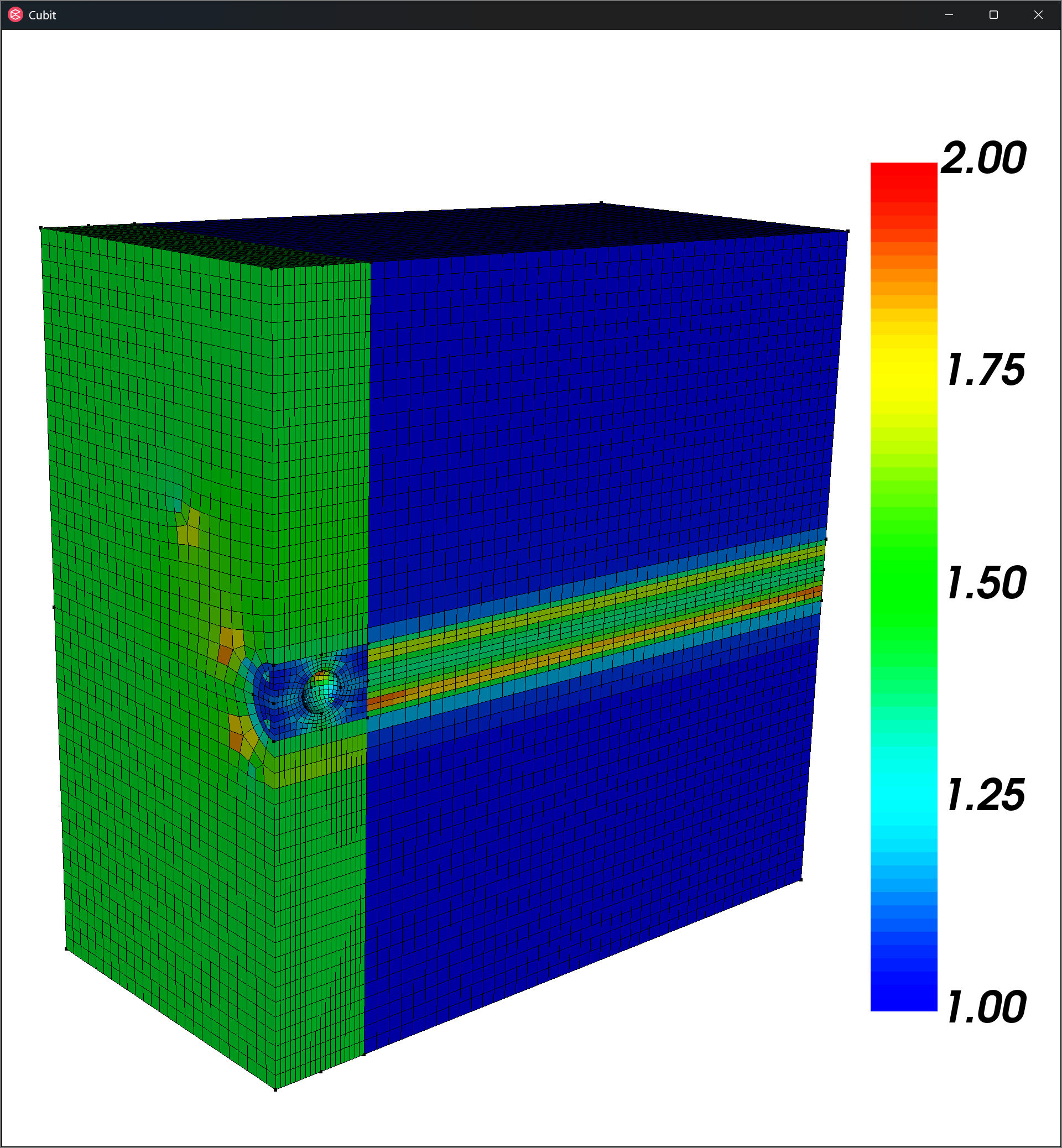
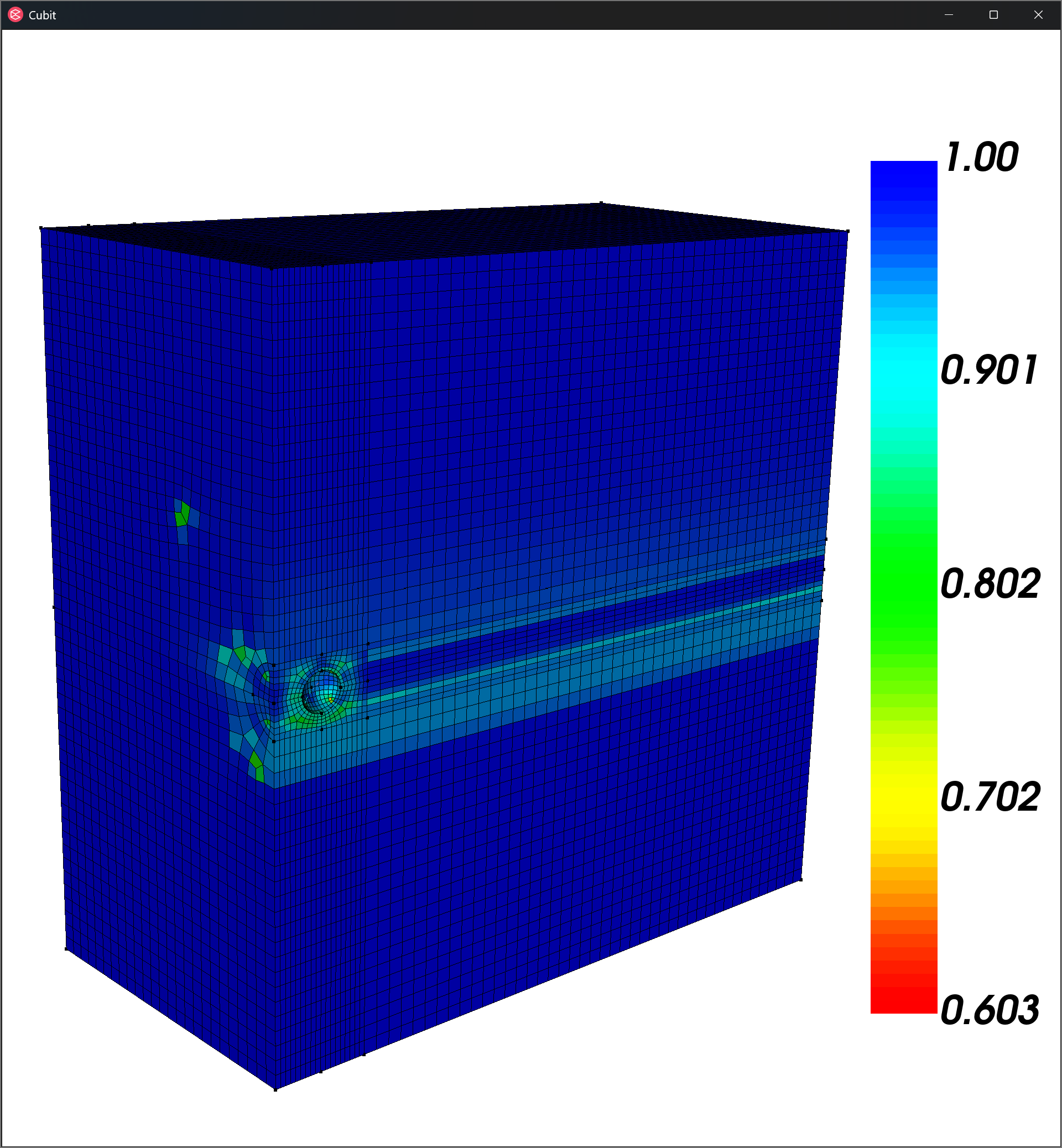
Scaled Jacobiandrops to~0.16in the transition zone (see attached screenshot).- Generation time is slower than expected for a background mesh.
 Current Journal Script:
# ==============================================
# 1. Environment Reset
# ==============================================
reset
set duplicate block elements off
set node constraint on
graphics pause
graphics triad off

# ==============================================
# 2. Geometry Definition
# ==============================================
# Ellipsoid semi-axes (meters)
${a=2000}
${b=2710}
${c=3032}
${z_cav=-6860}

# Outer computational domain
create brick x 100000 y 100000 z 100000
volume 1 name "outer_domain"
move volume 1 z -50000

# Ellipsoidal cavity tool
create sphere radius 1
volume 2 name "cavity_tool"
volume 2 scale x {a} y {b} z {c}
move volume 2 x 0 y 0 z {z_cav}

# Boolean subtraction to create the void
subtract volume 2 from volume 1
imprint all
merge all

# Split domain into 8 octants for meshing control
webcut volume all with plane xplane offset 0
webcut volume all with plane yplane offset 0
webcut volume all with plane zplane offset {z_cav}
imprint all
merge all

# ==============================================
# 3. Boundary Conditions (Side Sets)
# ==============================================
# External boundaries
sideset 1 add surface with x_coord <= -49999; sideset 1 name "xmin"
sideset 2 add surface with x_coord >= 49999;  sideset 2 name "xmax"
sideset 3 add surface with y_coord <= -49999; sideset 3 name "ymin"
sideset 4 add surface with y_coord >= 49999;  sideset 4 name "ymax"
sideset 5 add surface with z_coord <= -99999; sideset 5 name "zmin"
sideset 6 add surface with z_coord >= -1;     sideset 6 name "zmax"

# Cavity surface extraction (curvature filter avoids picking webcut planes)
group "cavity_surfs" add surface all with curvature > 1e-4
sideset 99 add surface in group cavity_surfs
sideset 99 name "magma_boundary"

# ==============================================
# 4. Meshing Strategy (Current Approach)
# ==============================================
# NOTE: This combination causes radial distortion and low Jacobian values
volume all scheme polyhedron
volume all sizing function skeleton \
    min_size 200 \
    max_size 4000 \
    max_gradient 1.2 \
    num_layers 3 \
    add size_source surface in sideset 99 size 200

mesh volume all

# Smoothing
volume all smooth scheme condition number beta 2.0 cpu 18
smooth volume all

# ==============================================
# 5. Node Sets & Export
# ==============================================
nodeset 1 add node in sideset 1
nodeset 2 add node in sideset 2
nodeset 3 add node in sideset 3
nodeset 4 add node in sideset 4
nodeset 5 add node in sideset 5
nodeset 6 add node in sideset 6
nodeset 99 add node in sideset 99

export abaqus "ellipsoid_cavity.inp" overwrite
save as "ellipsoid_cavity.cub" overwrite

quality volume all scaled jacobian global draw mesh
display
pause
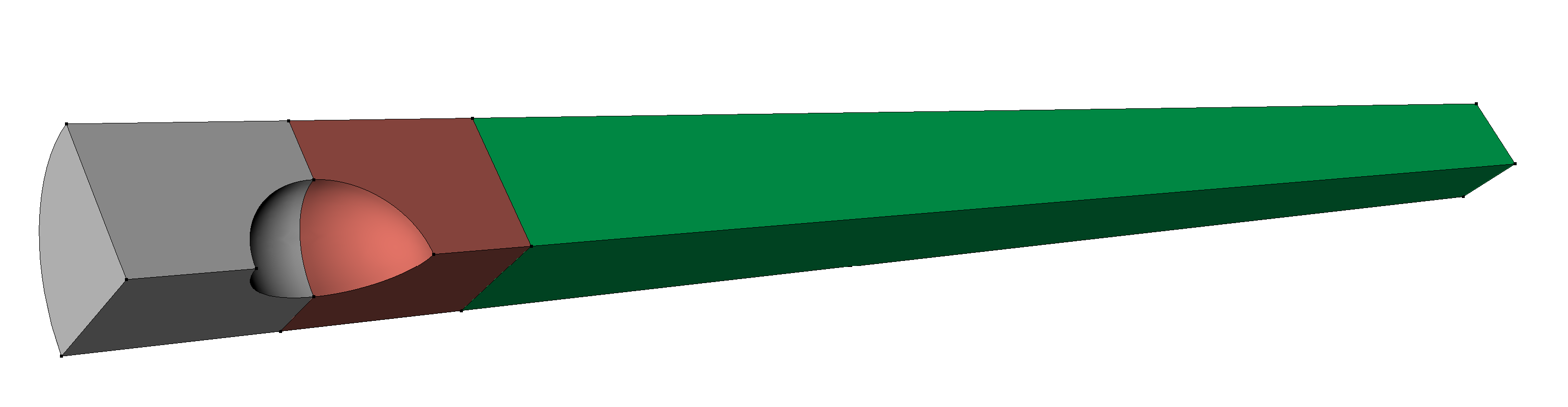
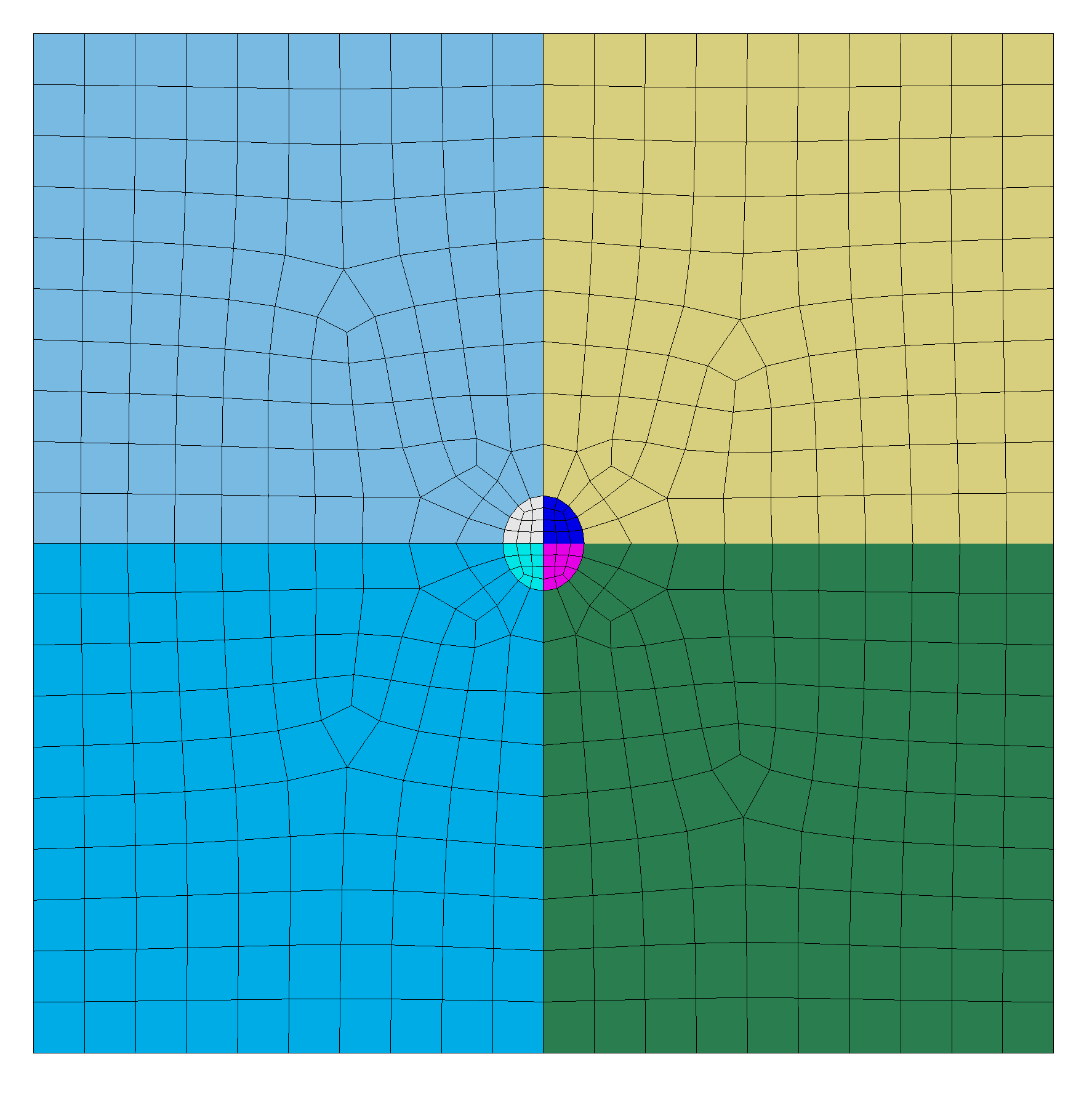
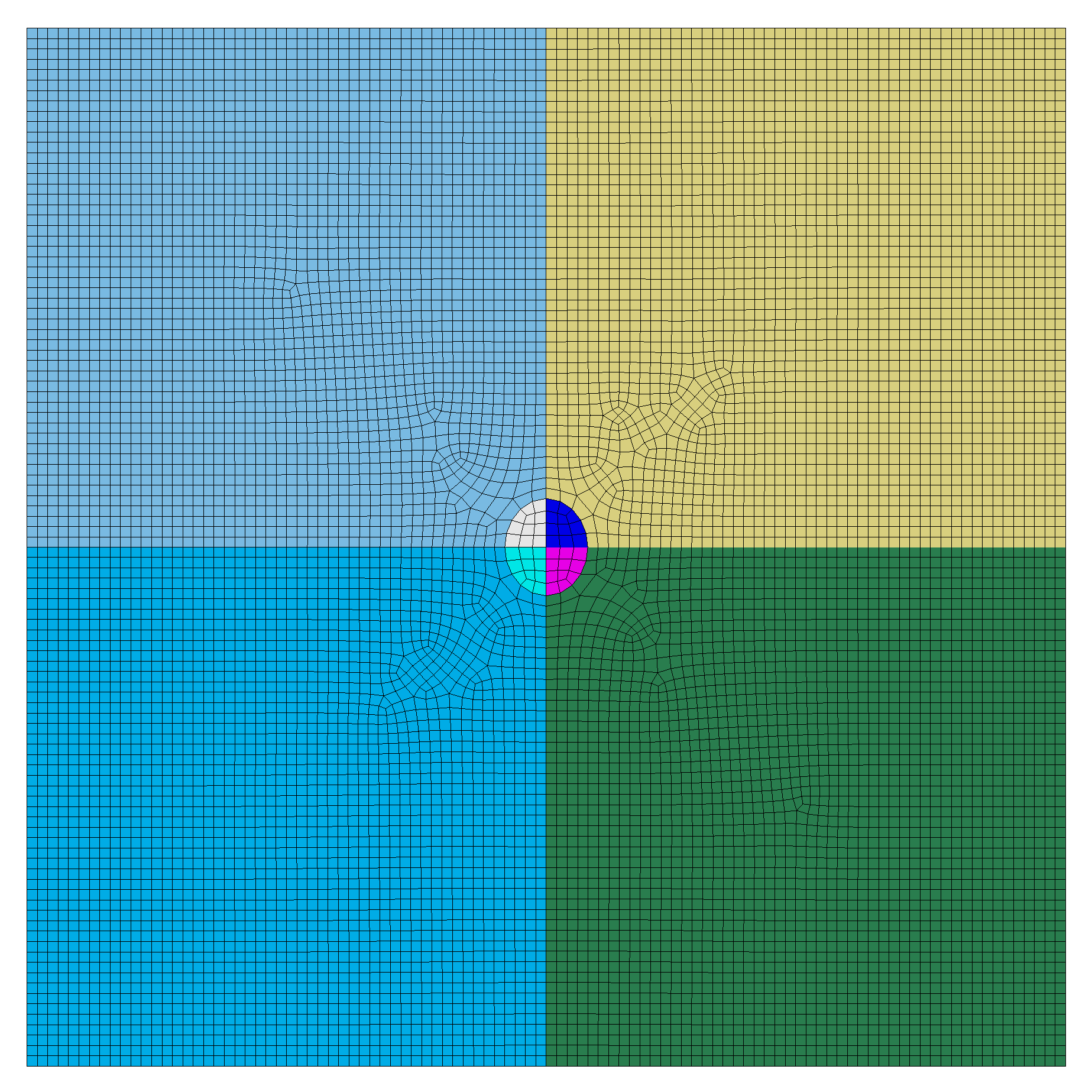
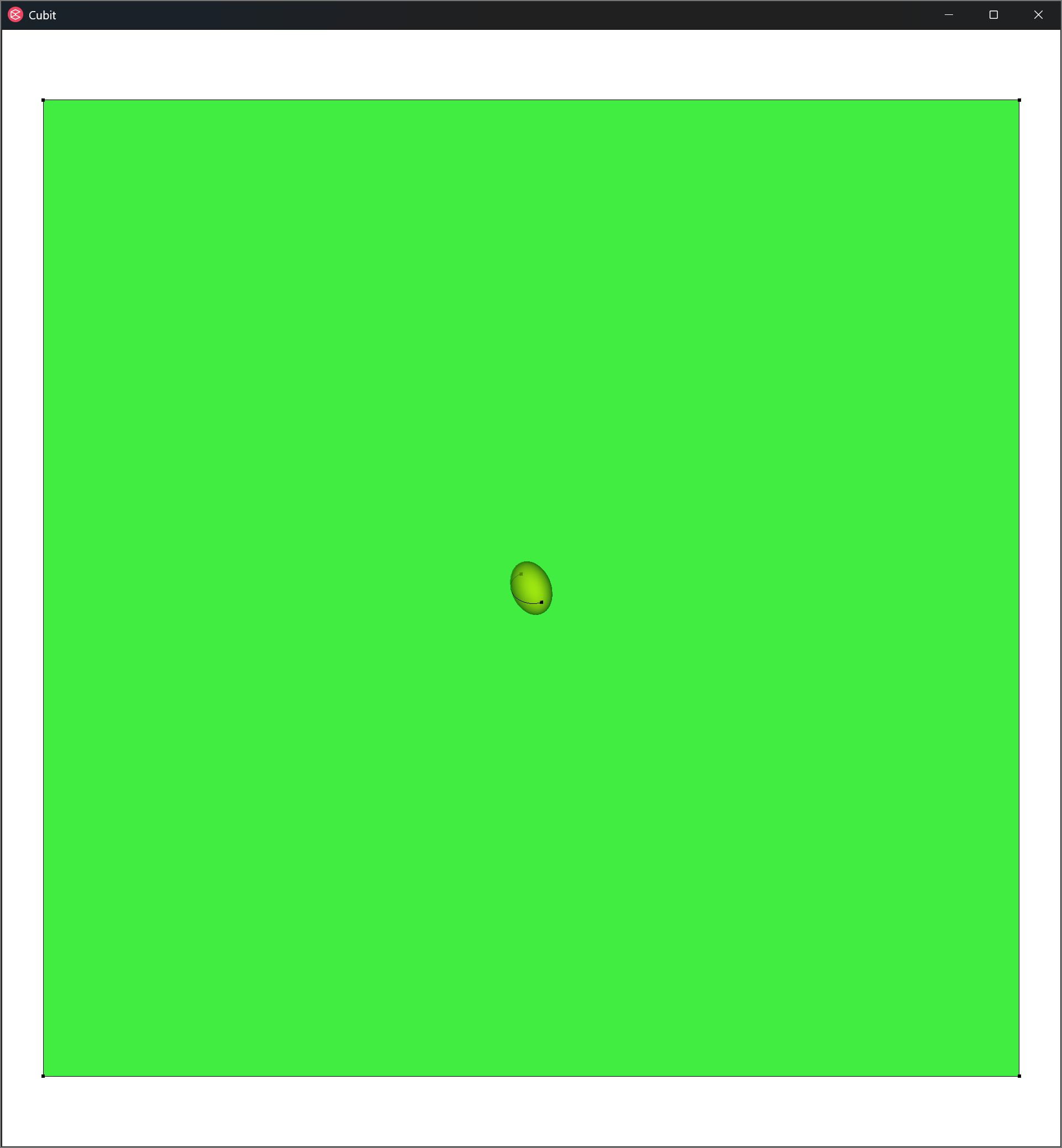
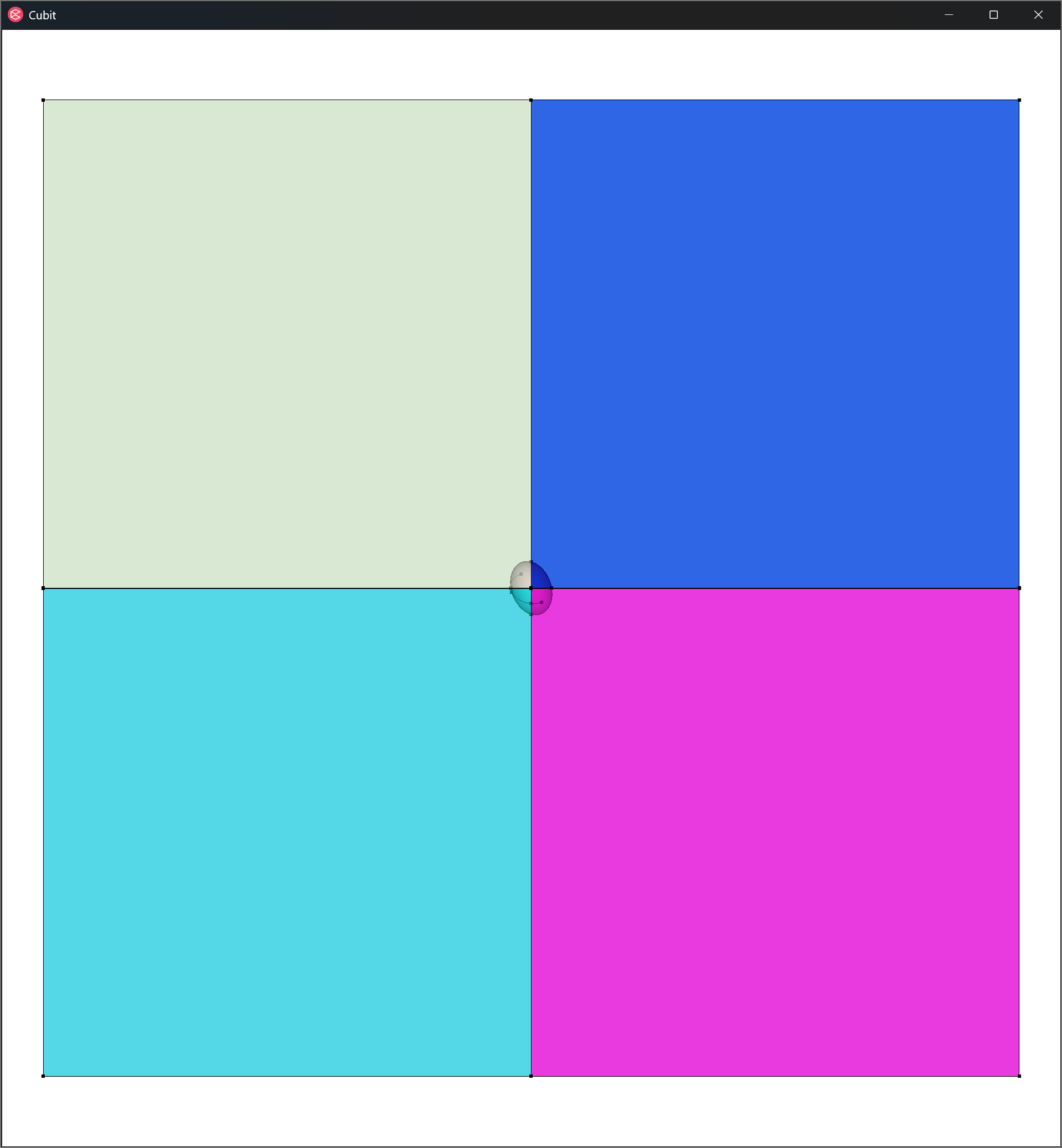
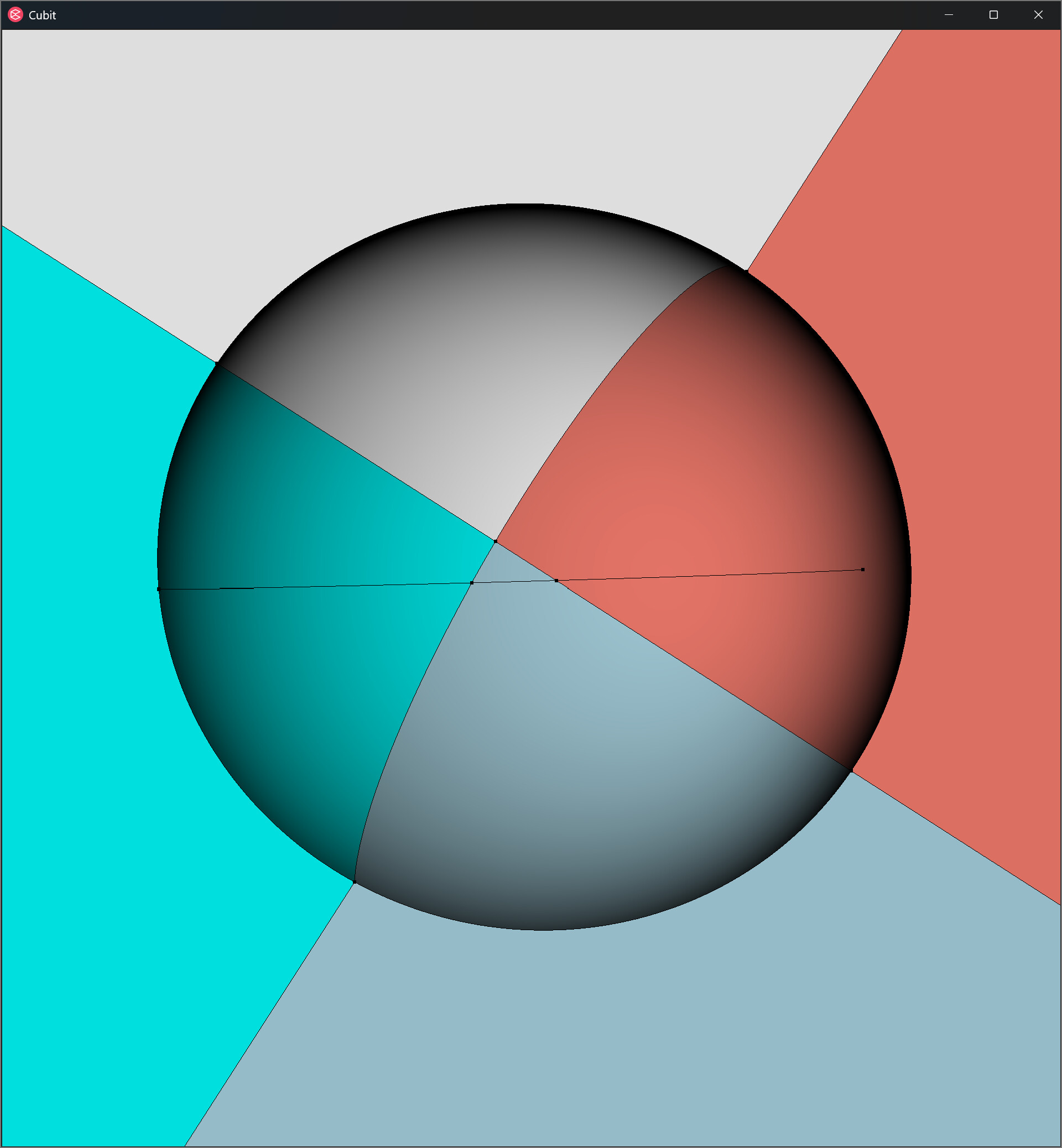
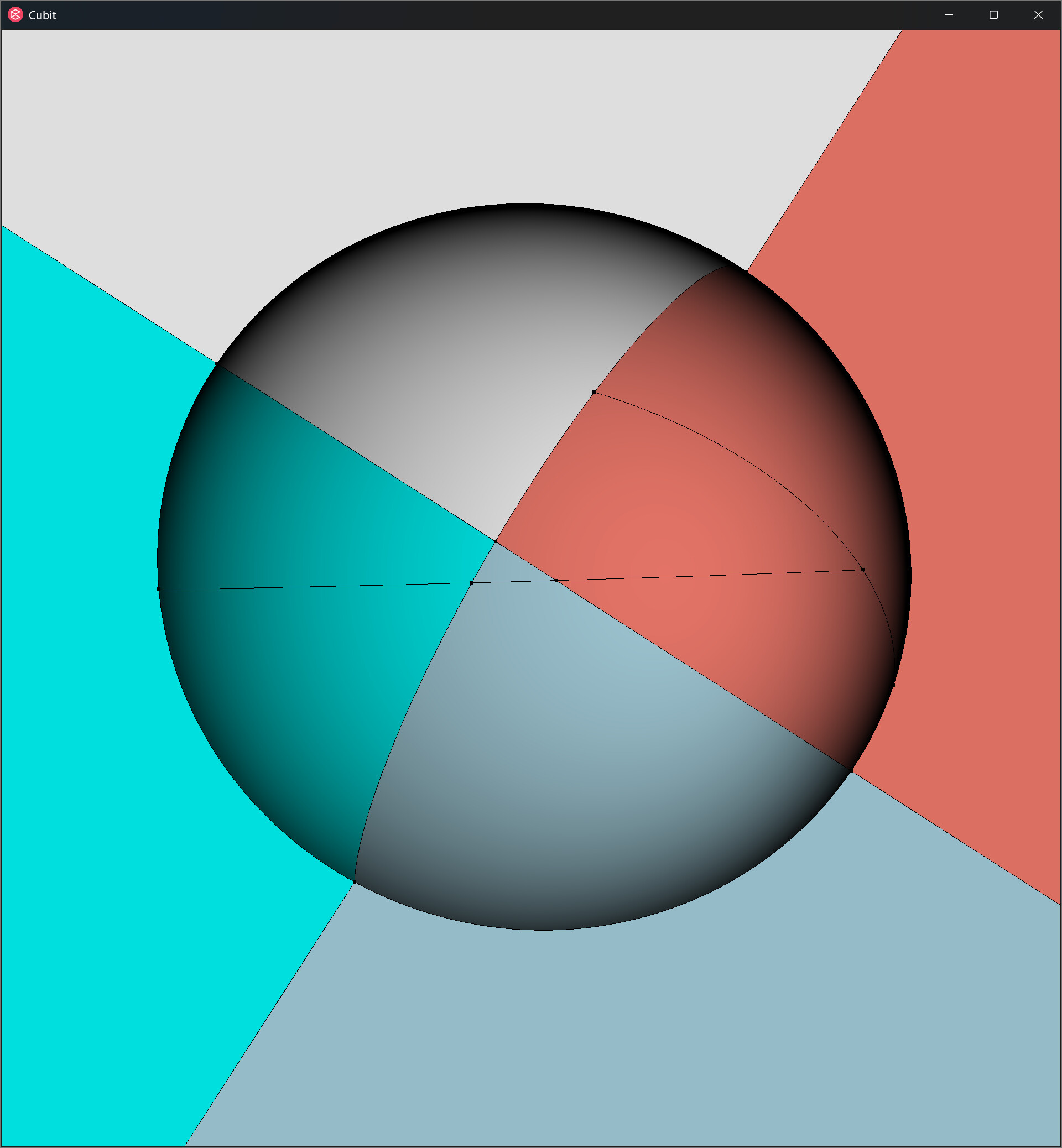
The current grid generation effect of the cubit code is as follows.
Question: What is the optimal meshing strategy (scheme, sizing function, and smoothing parameters) to generate a distortion-free hexahedral mesh with smooth size transition from the ellipsoidal cavity to the far-field boundaries?
Thank you for your time and expertise. I look forward to your recommendations.
Best regards,
Cubit User
Computational Geophysics & FEM Inversion Researcher