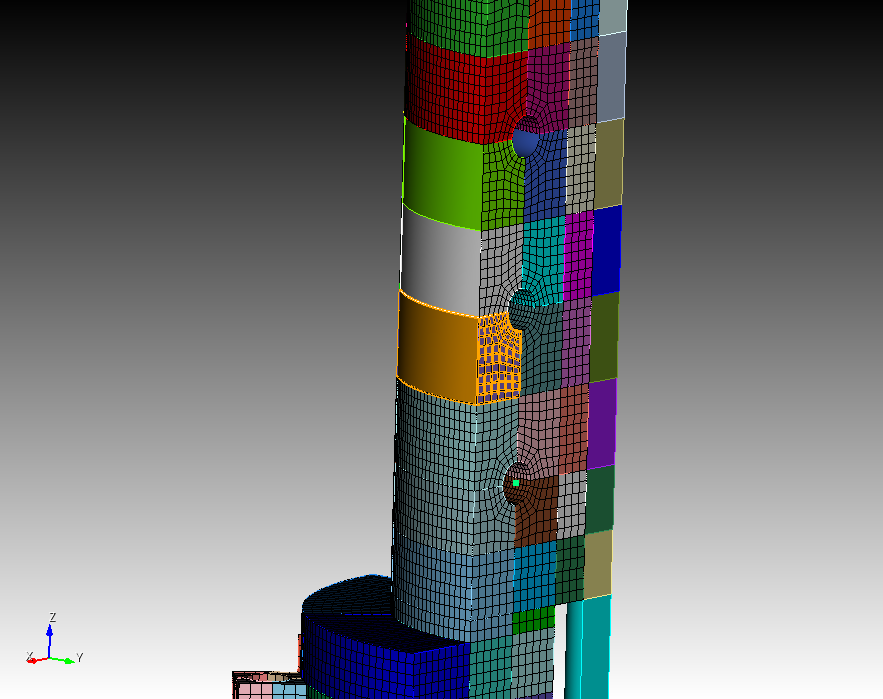
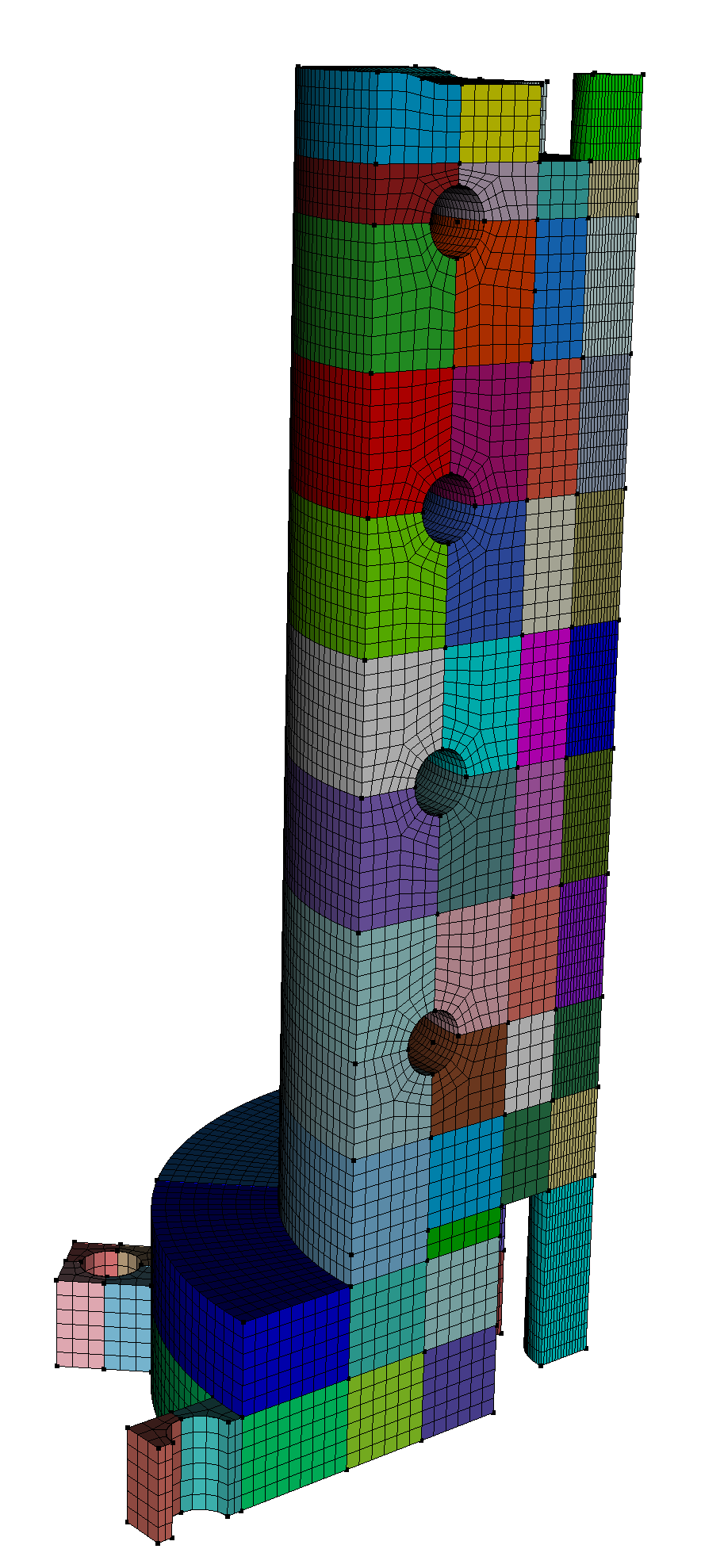
There’s no need to impose such a discretization on those remaining curves. Because those volumes have sweep mesh schemes, the linking surfaces are going to be mapped meshes. And since the volumes above and below are already meshed they’re already constrained. So applying an additional constraint will lead to an overconstrained system.
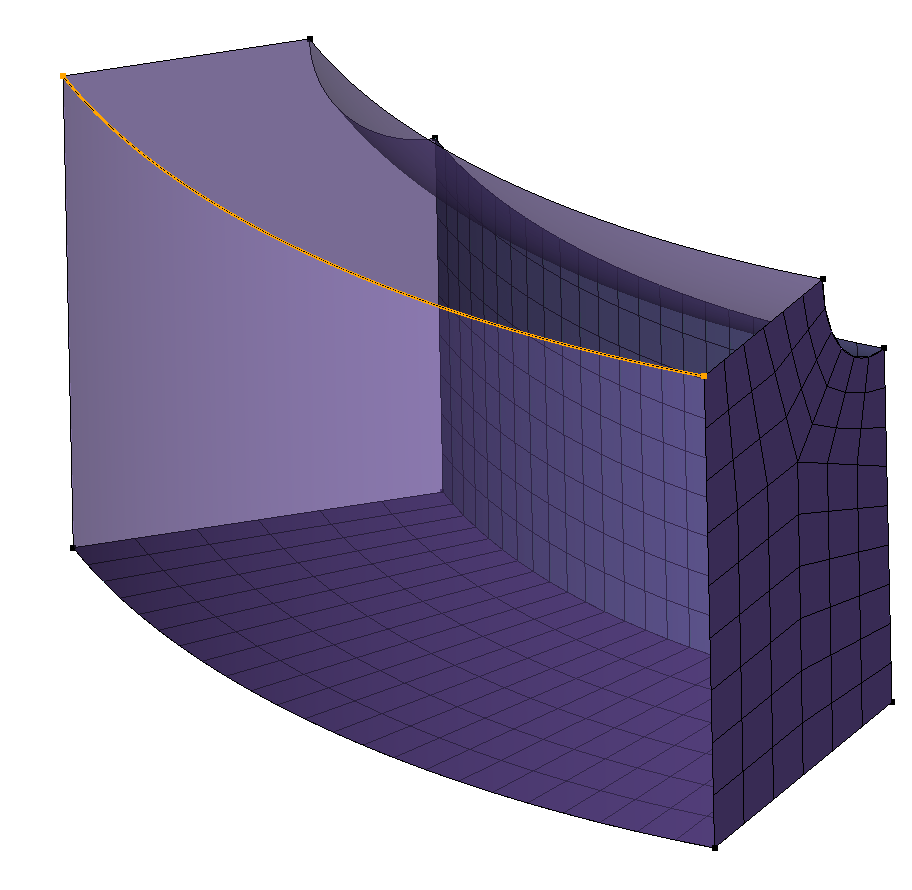
For example, here’s volume 67… see how it already has two linking surfaces that are meshed? Trying to enforce a hard interval on the highlighted curve will result in an overconstrained system:
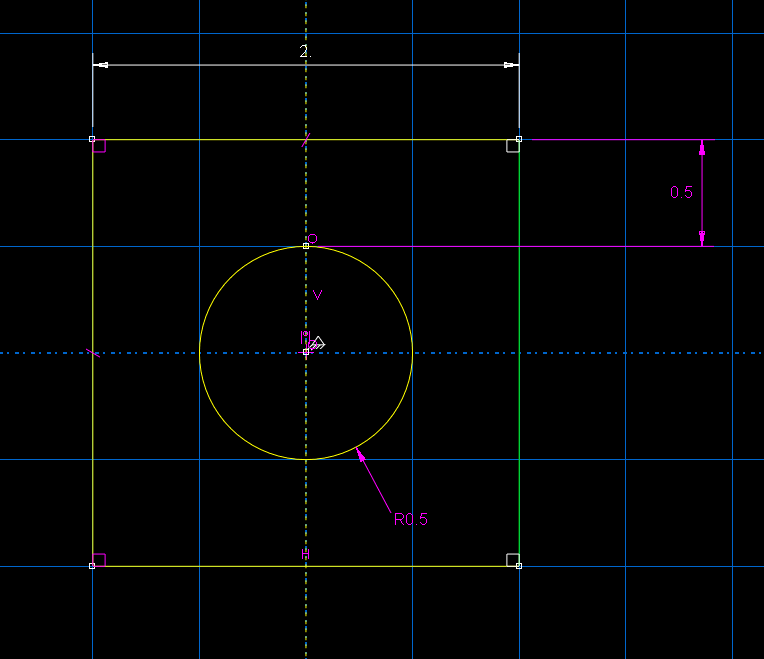
Even though you’ve set the interval count to be the same as the number of intervals on the meshed surfaces’ curves, this still results in an overconstraint similarly to how this sketch, in a parametric constraint-based sketcher, is overconstrained:
Whenever a user specifies an interval count, we consider that to be a hard constraint. We can convert these hard constraints to soft constraints with the command:
curve <curve_ids> interval soft
So, for example:
reset
open "test.cub5"

vertex all visibility on
curve all visibility on
surface all visibility on
volume all visibility on
body all visibility on

curve all except with is_meshed interval soft
mesh volume all
Yes I’m aware of about what you’re mentioning, but for a reason I do not understand, i was not able to mesh thoses 2 volumes => that’s why i tried to enforce discretization.
I was wondering how to “remove” the constraint: it’s always possible to “overwrite” it, and now I can see it’s possible to under-constrain it.
 ), i do not understand why in cannot mesh the volumes 67/60?